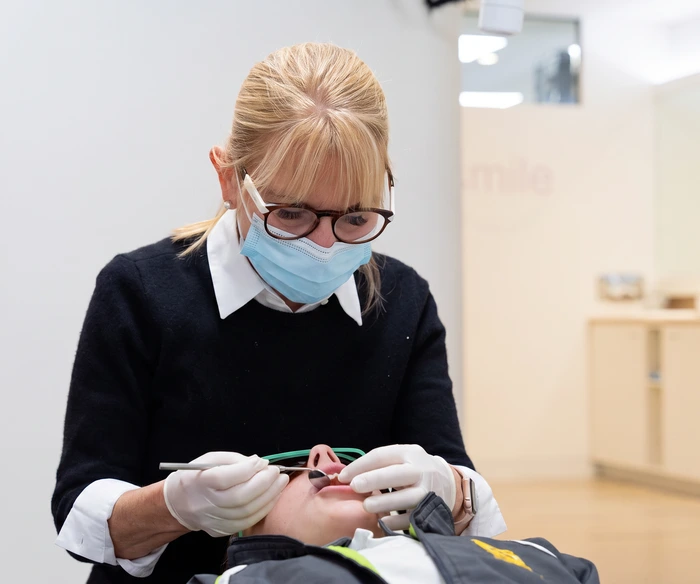

Expanders & early treatment
Sometimes the best time to act is while your child is still growing. Appliances such as palatal expanders can guide jaw development and create room for adult teeth — often making any later treatment simpler.
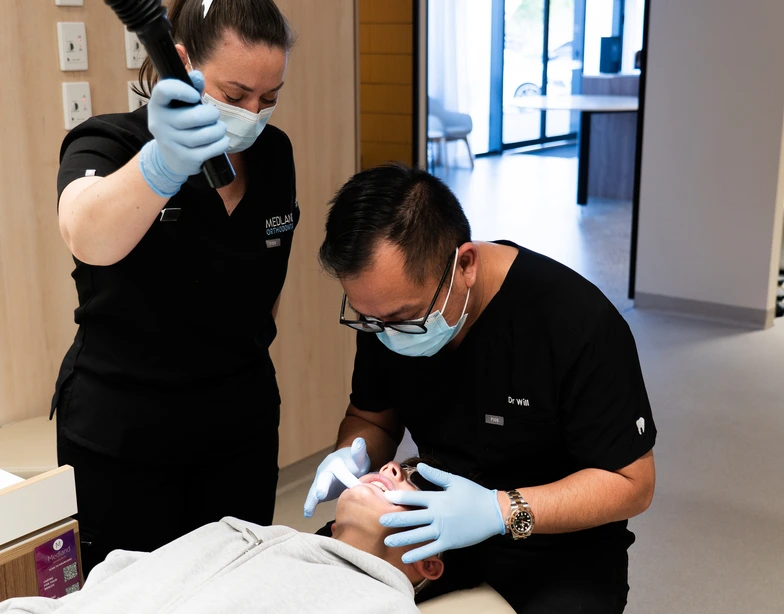
Guiding growth at the right time
For children aged 7 to 12, our Growth Guidance Program keeps a close, friendly eye on how your child's smile and jaw are developing — so we can act at exactly the right moment, not too early and not too late.
If treatment is needed later, that might mean braces or Invisalign® — but acting early can make that next stage shorter and simpler.
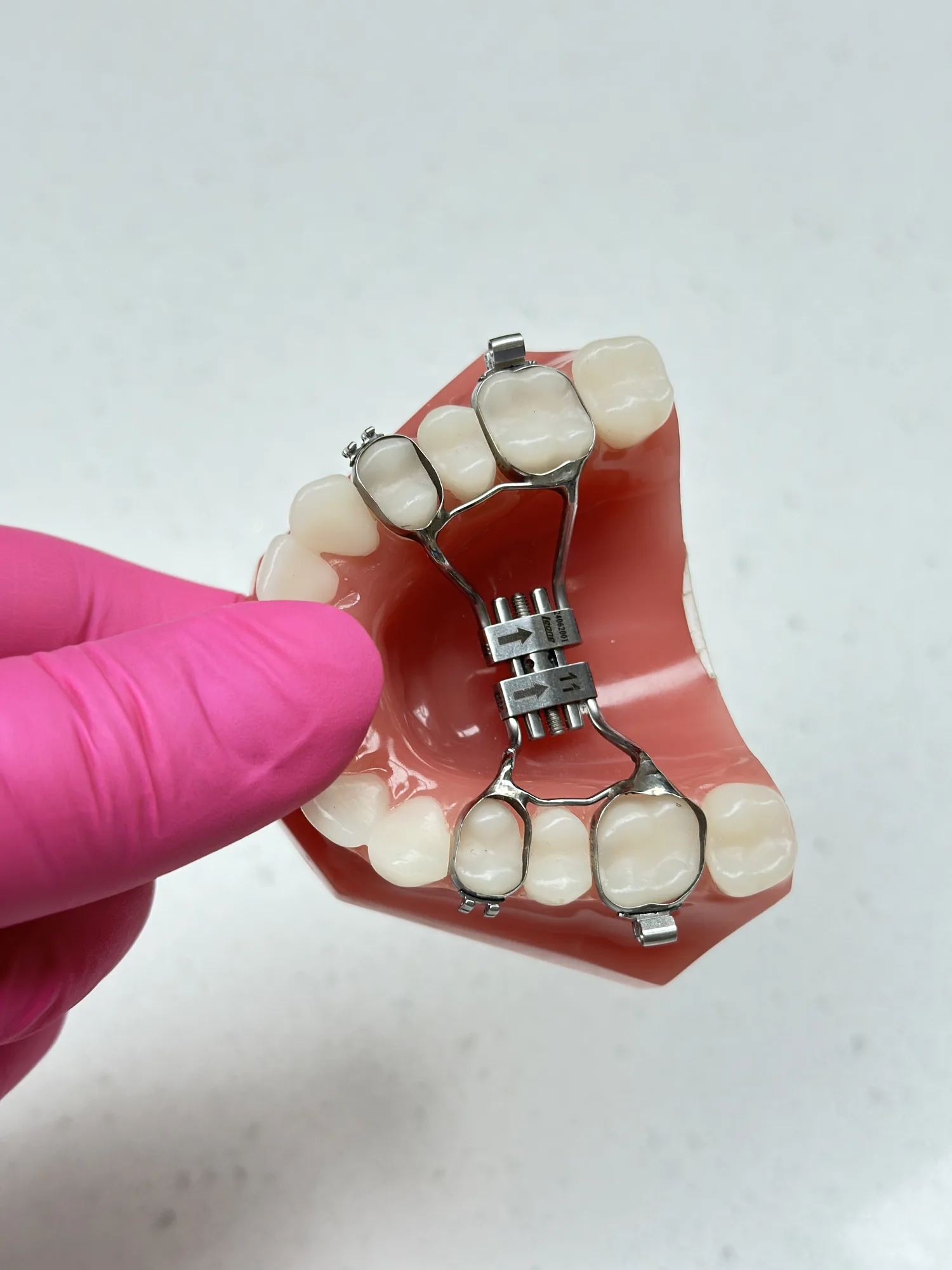
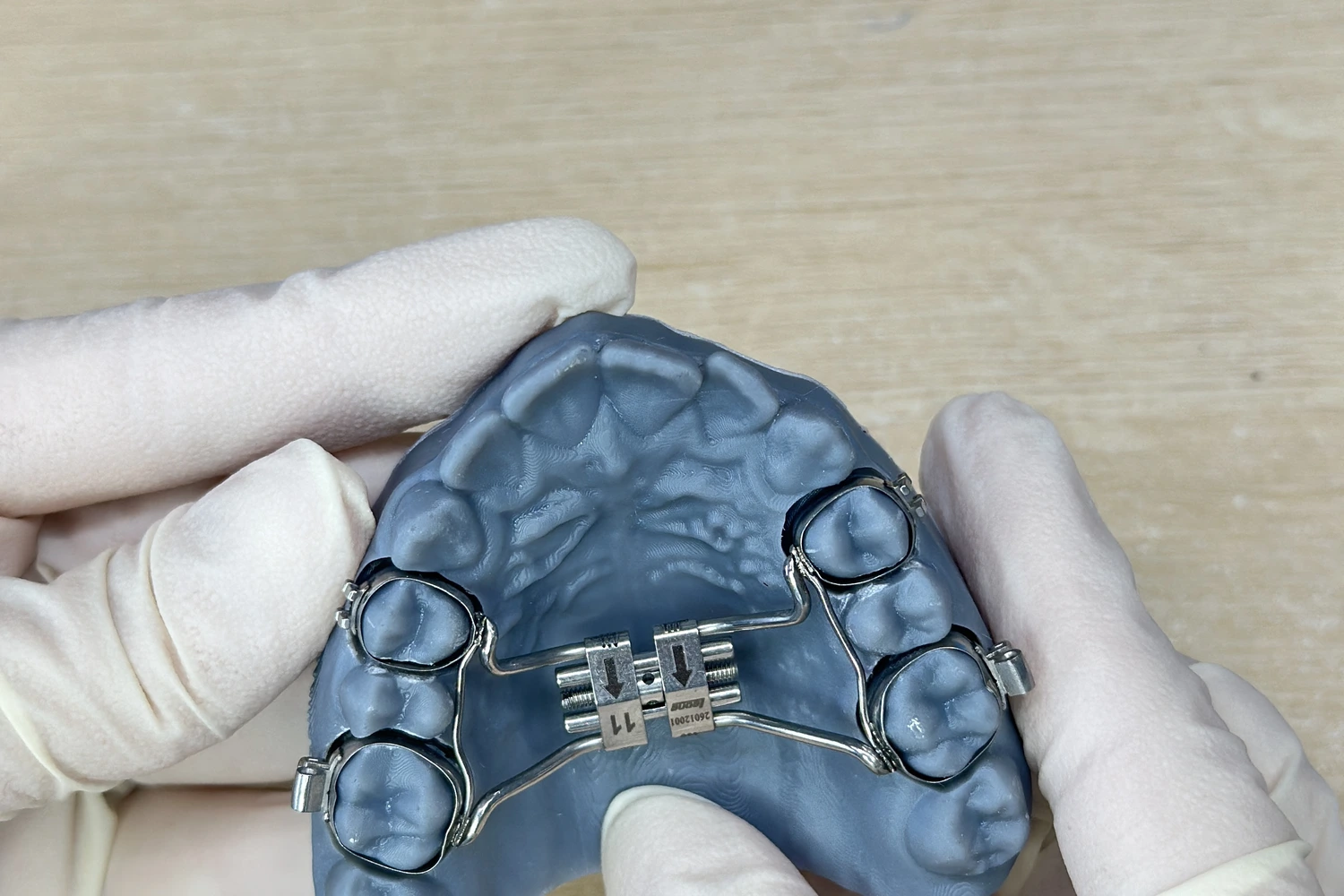
What is a palatal expander?
A palatal expander gently widens the upper jaw by easing apart the natural growth join in the roof of the mouth. As it widens, new bone fills the space, creating room for adult teeth to come through in better positions.
It's most effective while children are still growing, and is often used to correct a crossbite, relieve crowding, or make space for teeth that don't have room — and it can sometimes help with mouth breathing too.
What to expect with an expander
The expander is adjusted a little each day with a small key — something we'll show you exactly how to do. Your child may feel mild pressure for the first few days, notice a slight change to their speech, or have a little more saliva than usual. Most children adapt within about a week.
Soft foods help in the early days, and a small gap may appear between the front teeth — that's a normal, healthy sign the expander is working, and it usually closes on its own.
Why early treatment helps
Acting at the right stage can make a real difference to your child's long-term smile.
Guides jaw growth
Gently directs development while your child is still growing.
Creates room
Helps adult teeth come through in healthier positions.
Can simplify later care
Early action may reduce the complexity of treatment down the track.
Monitored by specialists
Part of our Growth Guidance Program for ages 7–12.
Expanders & early treatment FAQ
It gently widens the upper jaw to create space and correct issues like crossbite or crowding, while your child is still growing.
Your child may feel mild pressure for the first few days after it's fitted and when it's adjusted — this is normal and settles quickly.
There may be a temporary change to speech and a little more saliva at first. Soft foods help early on, and most children adapt within about a week.
A small gap is a normal, healthy sign the expander is working. It usually closes on its own as treatment continues.
We recommend a first check-up around age 7, even if no treatment is needed yet — it lets us plan ahead.